
Ragdoll 3: Monster Playground
oZ StudioCasual
3.066.00 Reviews
- Version
- 0.3.1
- Installs
- 1.00M
- Age Rating
- Teen
Screenshots
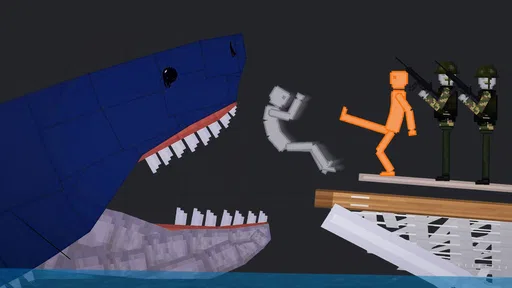
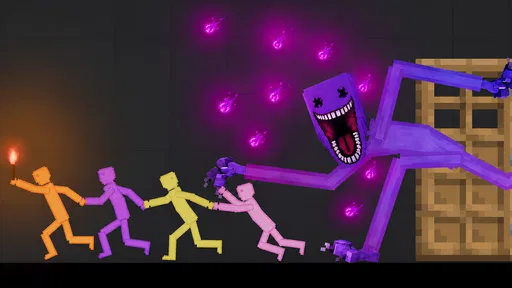
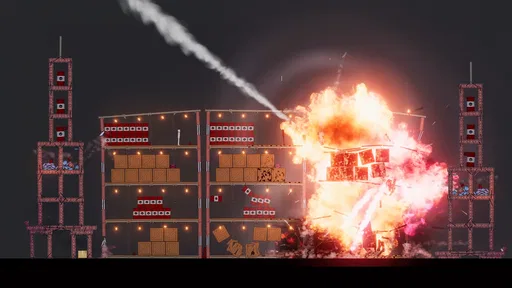
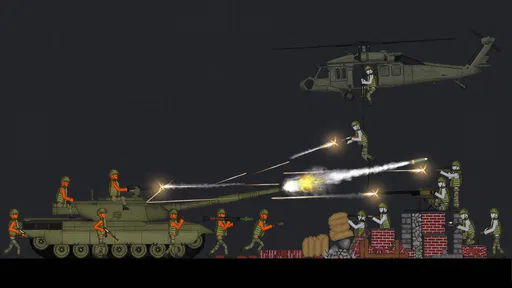
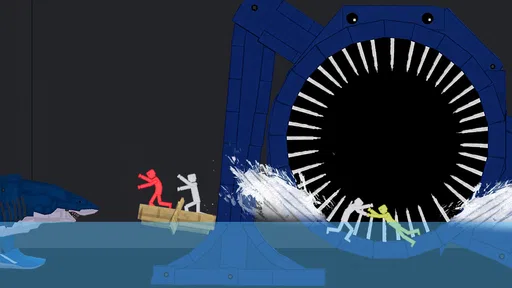
Our Review of Ragdoll 3: Monster Playground
 Analysis by Appyee
I spent time with Ragdoll 3: Monster Playground as a casual physics sandbox, and my first impression was that it is best understood as a quick shared-device toy rather than a traditional level-based game. The appeal comes from placing characters and objects into a playful scene, then watching the results unfold. It is easy to hand to someone else for a few minutes, easy to understand without a long tutorial, and unpredictable enough to create small moments of amusement.
That simplicity also explains its limits. This is not the kind of game I would choose when I want a deep progression system, a carefully balanced challenge, or a long-term competitive goal. Its average rating sits at 3.3 from around 1,700 ratings, while its reach has passed one million installs, so the audience is clearly broad but the experience is not universally loved. My view is that the game works when I treat it as a playful experiment, not as a complete replacement for a more structured casual game.
How it works when a household shares one device
The most natural use case for me was a short session with another person nearby. One player can arrange a scene, make something happen, and then pass the device to a sibling, friend, or parent to try a different setup. That handoff is more important here than it would be in a conventional puzzle game because the fun is often in comparing ideas: one person creates a chaotic situation, the next person changes the arrangement, and everyone watches the outcome.
That makes it suitable for a waiting room, a quiet break, or a few minutes at home when people want something visual without committing to a full match. I would not call it a dependable group game, because the experience is centered on one screen and the enjoyment depends on everyone agreeing about how to take turns. Still, it has a useful social quality: people can discuss what to place, predict what will happen, and laugh at an unexpected result without needing separate accounts or a network session.
A realistic example would be a family sharing a tablet after dinner. One person experiments with a monster-themed setup, another tries to create a different chain of motion, and a third simply watches. The session can end naturally after a few attempts. There is no pressure to finish a campaign before putting the device away, which is a genuine advantage over games that punish interruptions or make the next player repeat a long sequence.
The trade-off is that the same open-ended design can become repetitive. If everyone keeps making similar scenes, the surprise fades quickly. I found that the best shared sessions came from setting a small challenge before starting, such as trying to create the most unusual reaction or making a scene that behaves differently after one object is moved. These self-imposed goals give the sandbox direction without pretending it has the structure of a puzzle campaign.
What to expect from the sandbox format
The game’s central pleasure is experimentation. Instead of following a fixed route, I could focus on how the ragdoll characters and monster-playground setting reacted to a new arrangement. That makes each attempt feel more like a miniature test than a conventional round. The result is often more entertaining when I stop trying to control every detail and let the physics produce something strange.
One useful habit is to change only one element at a time. When I alter everything between attempts, it becomes difficult to understand why the result changed. Keeping most of the setup stable and adjusting one position or object turns the game into a simple cause-and-effect exercise. This is a small technique, but it makes the sandbox feel less random and gives children or casual players a clearer way to explore it.
I also recommend agreeing on a stopping point before handing the device around. Because there is no obvious need to end after a single attempt, one player can easily continue while others wait. A simple rotation—one setup per person, followed by a shared vote for the most amusing result—works better than leaving the turn order vague. That is not a built-in household feature; it is a practical way to make the game fair on a shared screen.
Another non-obvious strength is that the game can serve different moods without changing its basic controls. A younger player may enjoy the visual reactions, while an older player may approach the same scene as a small physics puzzle. I would not present it as an educational tool, but it does reward observation and repeated testing. The value comes from the player’s curiosity, not from a formal lesson or measurable progression.
Setting boundaries before passing the device
Ragdoll 3: Monster Playground is free to download, but it includes in-app purchases ranging from $0.99 to $29.99 per item. That matters in a household where several people use the same phone or tablet. Before giving the device to a child, I would make sure the person responsible for purchases understands that free access and purchase access are separate questions. The game can be tried without an upfront price, but a shared device should never be treated as though every on-screen option is automatically cost-free.
I would also decide who is allowed to change settings, approve purchases, or manage the store account before the first shared session. The game itself should not be expected to solve account boundaries. If the device belongs to a parent but is regularly used by children, the safest routine is to keep payment decisions with the adult and make the rule clear in ordinary language. That avoids the awkward situation where a child assumes that a button is part of the game while the owner sees it as a financial decision.
This is especially important because the game’s quick, playful format encourages rapid tapping. In a private session, that immediacy is part of the fun. On a shared device, it means I would slow down around any screen connected with purchases or account actions. I would not hand over the device and walk away until I knew the child understood which actions are ordinary gameplay and which require permission.
Storage and device time deserve a boundary too. The game is a casual diversion, so I would use it as a defined break rather than an automatic default whenever someone is bored. A short turn limit keeps the experience social and prevents one person from monopolizing the screen. Since the game is built around experiments rather than a long story, stopping after a set number of attempts feels natural and does not create the frustration of abandoning a major mission.
Coordinating turns and expectations
Shared play works best when the group agrees on what counts as a turn. I found three practical formats useful: one person designs while everyone watches, players alternate complete setups, or one player chooses the scene while another predicts the result. The first format is good for younger users who may need help, while alternating setups gives older children or adults a stronger sense of ownership.
The prediction format is particularly effective because it changes the focus from simply tapping objects to thinking about consequences. Before starting the scene, each person explains what they expect to happen. Afterward, the group compares the prediction with the result. This keeps a failed experiment interesting and reduces the temptation to judge a turn only by whether it looked impressive.
I would avoid presenting the game as a competition unless everyone enjoys that style. The physics can produce outcomes that feel inconsistent from a player’s point of view, and a sandbox is usually more enjoyable when the goal is discovery. If one child is sensitive to losing, cooperative challenges are better: create a scene together, test it, then improve it as a group. If two players want competition, keep the rules informal and avoid claiming that the game offers a precise skill ranking.
For a household with different ages, a useful arrangement is to let the older player handle the initial setup while the younger player chooses one change. That gives the younger participant meaningful control without requiring them to understand every part of the interface immediately. It also prevents the experienced user from doing everything while the other person merely watches.
There is a second coordination issue: attention. Because the game can be visually entertaining even when someone else is playing, spectators may interrupt or suggest changes constantly. I would make the turn owner’s role clear, then invite suggestions before the scene begins. That small rule keeps the session from becoming chaotic in an unhelpful way and makes the shared-device experience feel more like cooperation than grabbing control.
Age context, trust, and the monster theme
The content rating is Teen, so I would not choose this casually for every child simply because the controls are easy. Ease of use is not the same as age suitability. The monster setting and ragdoll presentation may be harmless fun for some teenagers and families, but adults should consider the individual child’s comfort with cartoonish danger, collisions, and chaotic physical reactions.
For a teenager, the game is easier to recommend as a short creative sandbox, especially when the player understands that the scenes are fictional and exaggerated. For a younger child, I would preview the experience personally and decide whether the tone fits. I would also play alongside them at first, not because the game requires complicated supervision, but because shared context makes it easier to answer questions and establish boundaries.
Trust matters more than the novelty of the theme. If a child already knows how to ask before making purchases and understands that a shared device is not a private account, the game is simpler to manage. If those habits are not established, I would choose a different activity or keep the session directly supervised. The important point is not to assume that a casual label means there are no household decisions to make.
The developer is oZ Studio, and the current version is 0.3.0. That version detail makes me approach the game as an experience that may still feel early in its development rather than as a fully mature sandbox with every possible refinement. I noticed that this matters most to users who expect polished long-term variety. Someone who enjoys trying a game in its current form may be satisfied, while someone who wants a finished-feeling system should be more cautious.
The game runs on Android devices using version 7.0 or later. That gives it a relatively broad technical starting point for older compatible phones and tablets, but compatibility alone does not guarantee that every device will feel equally comfortable. A larger screen is preferable for shared use because several people can see the scene more easily. On a small phone, the same session becomes more personal and less suitable for a group gathered around the display.
Where it stands beside familiar casual alternatives
Compared with a puzzle game, this title gives me less certainty and more freedom. A puzzle usually tells me what success looks like, so I can improve through deliberate problem solving. Here, the reward comes from creating a situation and observing it. I would pick the puzzle alternative when I want a clear target, dependable progression, or a satisfying solution. I would pick this sandbox when I want to experiment without worrying about failing a level.
Compared with a physics construction game, it feels more immediate. Construction-focused alternatives often ask players to build carefully, manage resources, or refine a design over time. This game is better for quick trials and shared laughter, but it is not the choice I would make for detailed engineering or a project that I plan to revisit for days. Its strength is the short feedback loop: change something, run the scene, and see what happens.
Compared with a competitive multiplayer game, it is calmer in terms of coordination because the shared experience can happen on one device. There is no need to organize a match or ensure that everyone is online. On the other hand, it lacks the social depth and clear stakes that make multiplayer games compelling. If my friends are looking for teamwork, rankings, or a persistent online identity, I would recommend a dedicated multiplayer title instead.
It also differs from a standard action game because the fun is not mainly about mastering timing or defeating an opponent. The monster theme may suggest a more traditional battle experience, but I approached it primarily as a playground for reactions. That distinction is important before downloading: anyone expecting a complete combat adventure may find the open-ended format too loose, while anyone seeking a quick physics toy may appreciate the lack of a rigid campaign.
Who should try it, and who should skip it
I think it is a good fit for casual players who enjoy visual experimentation, teenagers who like playful physics, and households that want a simple pass-and-play activity. It is also useful for someone who has only a few minutes and wants an experience that can begin and end without preparation. The free entry point makes trying it straightforward, although the purchase boundaries still deserve attention on a shared device.
I would skip it if my priority were a deep story, carefully tuned stages, a stable competitive challenge, or a large sense of progression. I would also skip it for a young child if the Teen rating or monster-and-ragdoll tone did not fit the family’s standards. Players who become frustrated when an outcome feels unpredictable may prefer a puzzle game where each mistake provides a clearer lesson.
My practical advice is to start with a short solo session, then decide whether the game works better as a private toy or a shared activity. If it feels repetitive alone, try the structured household challenges described above before dismissing it. If the basic reactions do not hold your attention even when you experiment deliberately, more content or a different genre will probably serve you better.
My household verdict
After using it as both a solo diversion and a shared-screen experiment, I see Ragdoll 3: Monster Playground as a modest but approachable casual game with a clear personality. Its best moments come from curiosity, quick turn-taking, and the surprise of seeing a setup behave differently than expected. It does not need a long explanation, and that makes it easy to introduce to someone who is not a regular gamer.
My recommendation comes with a simple condition: treat it as a sandbox, not as a full-featured adventure. Keep purchase decisions with the account owner, agree on turns before sharing the device, and consider the Teen rating rather than assuming that a playful presentation suits every child. Those steps make the experience more comfortable at home and prevent the game’s casual nature from creating avoidable friction.
For me, the strongest reason to try it is its low-pressure shared play. I can create a scene, watch the physics, hand over the device, and stop without losing a major achievement. The weakest point is the limited sense of direction once the novelty wears down. With that balance in mind, I would recommend it to people who enjoy playful experiments and short household sessions, while pointing structured-game fans toward a more goal-driven alternative.
Verdict
Strengths of Ragdoll 3: Monster Playground
- Simple controls make it easy to experiment with physics.
- Large sandbox encourages creative and unpredictable setups.
- Monster characters add variety to destruction-based challenges.
- Quick loading suits short play sessions.
- Offline play is useful when no internet connection is available.
Limitations of Ragdoll 3: Monster Playground
- Physics can occasionally behave unpredictably or glitch.
- Repeated experiments may feel similar after extended play.
- Ads may interrupt gameplay or appear frequently.
- Some content may require progress or purchases to unlock.
- Visuals and animations are relatively basic on older devices.
Similar Picks in This Category
View All
My Talking Angela
Outfit7 Limited4.2

My Talking Tom
Outfit7 Limited4.3

Pou
Zakeh4.2

My Talking Tom 2: Pet Game
Outfit7 Limited4.3

Candy Crush Saga
King4.6

Bridge Race
Supersonic Studios LTD4.1
Frequently Asked Questions
What is Ragdoll 3: Monster Playground?
Ragdoll 3: Monster Playground is a physics-based sandbox game where you experiment with ragdoll characters, monsters, objects, weapons, and interactive environments. Instead of following a traditional story, you create your own scenes and test how characters react to different tools and obstacles. The appeal comes from its unpredictable physics, simple controls, and open-ended gameplay that encourages experimentation and funny or chaotic outcomes.
How do you play Ragdoll 3: Monster Playground?
Gameplay is mainly based on selecting characters and objects, placing them in the environment, and interacting with them using the available tools. You can move ragdolls around, arrange monsters, trigger objects, and observe the physics in action. There is no strict mission structure in the usual sense, so the experience is more about creativity and discovery. Players who enjoy sandbox games will likely understand the controls quickly.
Is Ragdoll 3: Monster Playground suitable for children?
The game may look cartoon-like, but its monster and ragdoll themes can include slapstick violence, crashes, explosions, or other destructive interactions. Because the content and physics are designed around experimentation, parents should check the official age rating and review the game themselves before allowing younger children to play. It is also worth checking whether advertisements, in-app purchases, or online features are present on the device version.
Does Ragdoll 3: Monster Playground require an internet connection?
The core sandbox experience may be playable offline, which is convenient when you want to experiment without using mobile data. However, some functions can depend on the version installed, including advertisements, updates, optional purchases, cloud-related features, or external content. Before relying on offline play, launch the game once with an internet connection and test the main modes. Requirements may also differ between Android and iOS releases.
Is Ragdoll 3: Monster Playground free to download?
Ragdoll 3: Monster Playground may be available as a free download, but free access does not always mean that every feature is included without limitations. The store listing should be checked for advertisements, optional in-app purchases, premium items, or restrictions on certain content. I also recommend confirming the developer name, required permissions, device compatibility, and recent user reviews before installing, especially because similarly titled games can appear in app stores.
Play our best games!


